Miami Property Taxes 2026: $51,411 Exemption, $250K in 2028

Antonio Aguirre
Last update: 2026-11-19
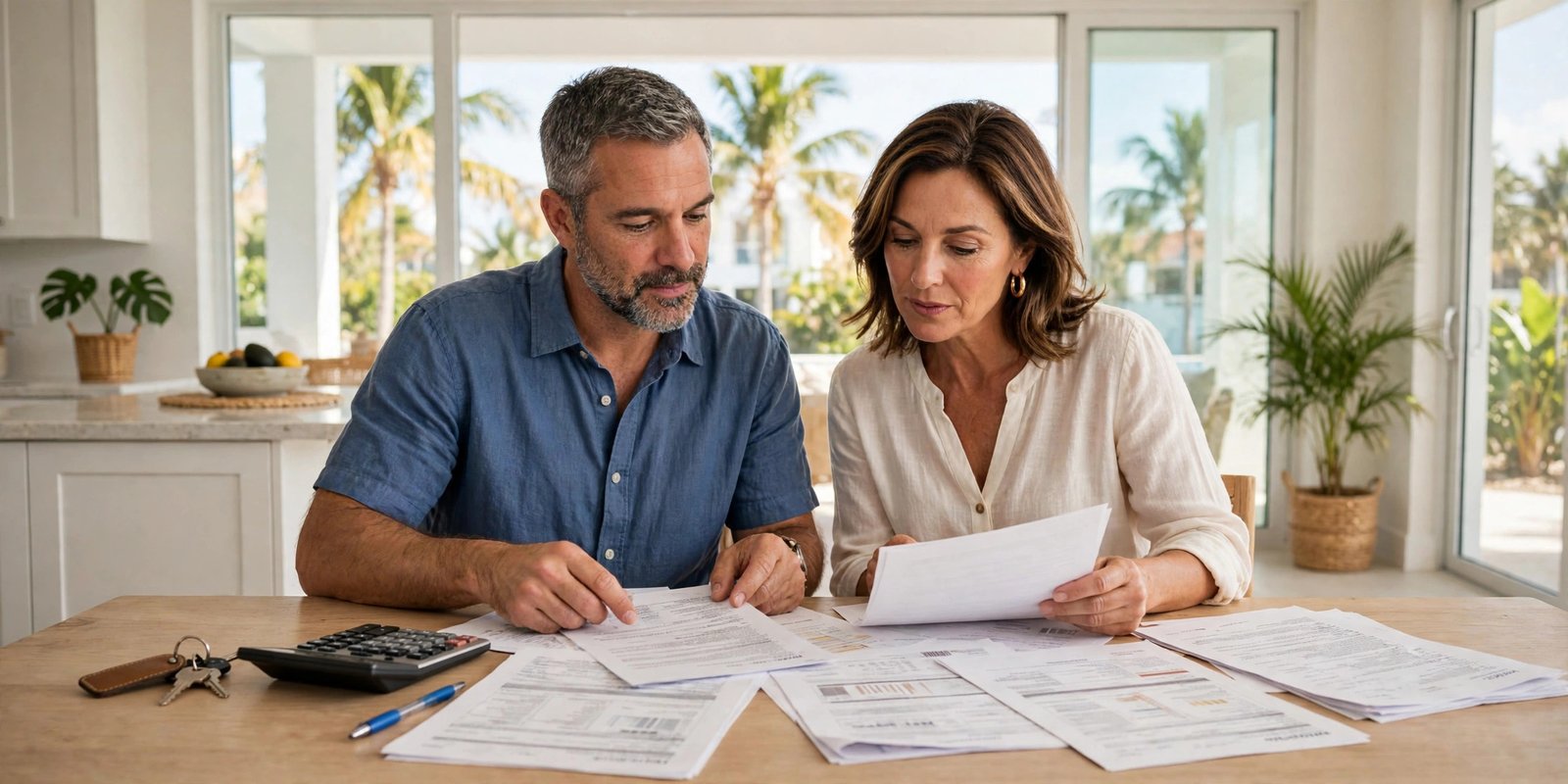
The short answer: in 2026 a Miami-Dade homestead takes up to $51,411 off your home's taxable value — $25,000 against every tax and an inflation-adjusted $26,411 more against non-school taxes (Florida Department of Revenue, January 2026 adjustment). And on November 3, 2026, Florida voters approved Amendment 3 with 61.98% of the vote: the non-school exemption jumps to $150,000 in 2027 and $250,000 in 2028 (Florida Department of Revenue, Bulletin PTO 26-21, November 5, 2026). On a $600,000 City of Miami home, that is the difference between an $11,122 tax bill in 2026 and $8,474 in 2028, at the same value and the same tax rate.
Property tax is the largest holding cost most Miami buyers under-budget — larger, in many buildings, than insurance. This guide gives you the 2026 rates by area, a worked example you can check line by line, the Save Our Homes cap that quietly does more than the exemption itself, and the December 31, 2026 residency date that now decides who gets the big new exemption on time.

Scan the code with your phone to message me on WhatsApp
The 2026 rates: what a mill buys, and what your area charges
Florida property tax is charged in mills: $1 of tax per $1,000 of taxable value. Your total is a stack — county, city (or the unincorporated-area levy), school board and small regional districts — and the stack changes with your address. The Miami-Dade County Property Appraiser's adopted totals for tax year 2026:
| Address | 2026 total millage | Tax on $500,000 of taxable value |
|---|---|---|
| City of Miami | 19.9544 mills | $9,977 |
| Miami Beach | 18.6681 mills | $9,334 |
| Unincorporated Miami-Dade (much of Kendall, Westchester) | 16.8983 mills | $8,449 |
Inside every one of those totals sits the same school levy: 6.623 mills for fiscal 2026-27 (Miami-Dade County School Board, adopted September 9, 2026). Keep that split in mind — school and non-school taxes are exempted differently, and that is where the worked example below gets its shape. Your exact stack depends on your parcel; the Property Appraiser's estimator gives the figure for a specific address.
The worked example: a $600,000 City of Miami homestead, 2026 to 2028
Take a home assessed at $600,000 in the City of Miami, lived in as a permanent residence. School taxes (6.623 mills) are charged on $575,000 — the value minus the $25,000 exemption that applies to all taxes. Non-school taxes (13.3314 mills, the rest of the 19.9544 total) are charged on the value minus the year's non-school exemption. Holding value and rates constant to isolate the exemption:
| Year | Non-school exemption | School tax | Non-school tax | Total bill |
|---|---|---|---|---|
| 2026 | $51,411 | $3,808 | $7,313 | $11,122 (about $927 a month) |
| 2027 (Amendment 3) | $150,000 | $3,808 | $5,999 | $9,807 |
| 2028 (Amendment 3) | $250,000 | $3,808 | $4,666 | $8,474 |
Three readings. First, the 2026 homestead itself saves $851 against the $11,973 the same home would pay with no exemption at all — worthwhile, not dramatic. Second, Amendment 3 is dramatic: $1,314 more saved in 2027 and $2,647 more in 2028 than under today's exemption, on this one home. Third, the school line never moves — the bigger exemption does not touch school taxes, which is also why Miami-Dade voters could renew the separate 1-mill school levy on the same November 3 ballot. In real life your assessed value will also move (capped, see below) and millage is reset every September, so treat the table as the exemption's effect, not a three-year quote.
Save Our Homes: the cap worth more than the exemption
Once your home is homesteaded, the Save Our Homes rule (Florida Statutes section 193.155) caps how fast its assessed value can rise: the lesser of 3% a year or the change in the Consumer Price Index — 2.7% for 2026. Market value can run; your taxable value walks. Over a decade in a rising neighborhood, that gap — market value minus capped assessed value — is usually worth far more than the $51,411 exemption itself.
Two traps and one gift come with it. Trap one: the seller's bill does not transfer. When a home sells, its assessed value resets toward market value, so budget your taxes at your purchase price, never at the listing's current tax line — the single most common budgeting error we see, and it compounds the other holding costs in Miami Condo Costs in 2026. Trap two: renting it out or moving out abandons the homestead, and the cap is lost. The gift: portability. Move within Florida and you can carry up to $500,000 of your accumulated Save Our Homes difference to the new homestead — file Form DR-501T with your new county's property appraiser, within three years of leaving the old home and by the March 1 deadline.
Amendment 3, in full: what changes, who qualifies, and the December 31 date
Amendment 3 — formally House Joint Resolution 1-F — was approved on November 3, 2026 with 61.98% of the vote (Florida Division of Elections, unofficial returns; 60% was required). The Department of Revenue's Bulletin PTO 26-21 of November 5, 2026 confirms the mechanics: it takes effect January 1, 2027, first applies to the 2027 tax roll, and the first bills it changes arrive in November 2027. The 2026 bills you may have just received do not change.
The residency cutoff is the part to act on. Owners who held a Florida permanent residence by December 31, 2026 receive the full $150,000 in 2027 and $250,000 in 2028 (inflation-adjusted from 2029). Buyers who establish Florida residency after that date start with up to $50,000 against non-school taxes and reach the larger exemption only in their fifth year of homestead. If you are closing on a Miami home you will live in, closing and establishing residency before year-end 2026 is now a five-figure decision over the next few years — on the worked example above, the difference between the two tracks is roughly $1,300 in 2027 and $2,600 a year from 2028, every year until the fifth.
Investors and second-home owners get a different benefit: the yearly cap on assessment increases for non-homestead property falls from 10% to 5%, for non-school taxes, from January 1, 2027. It does not stop the reset at sale, but it slows the climb while you hold — relevant if you are running the rental numbers in Miami Rental Demand 2026. And if you are still at the offer stage, remember taxes are only one line of the purchase: the full closing account is in Miami Closing Costs 2026. And if you are buying new construction instead — Faena Residences Miami, Cipriani Residences Miami, Delano Residences Miami, Midtown Park Residences and Frida Kahlo Wynwood Residences — budget the tax on the full launch price from the very first bill: a new unit has no seller's capped value to inherit.
Dates that run the system
January 1 — the assessment date: you must own the home and live in it as your permanent residence on this date to claim homestead for that year. March 1 — the filing deadline with the Miami-Dade County Property Appraiser (section 196.011); file online, and file the DR-501T the same day if you are porting a Save Our Homes benefit. Around November 1 — bills are mailed. Pay in November for a 4% discount; the discount slides by a point a month to 1% in February, the gross amount is due in March, and taxes are delinquent on April 1 (section 197.162). On an $11,122 bill, the November discount alone is $445 — the easiest money in this entire guide.
Frequently asked questions
How much is the Florida homestead exemption in 2026?
Up to $51,411 of assessed value: the first $25,000 is exempt from all property taxes, and an additional inflation-adjusted $26,411 is exempt from non-school taxes on assessed value above $50,000 (Florida Department of Revenue, January 2026 adjustment; Florida Statutes section 196.031). You must own the home, live in it as your permanent residence on January 1, and file by March 1.
What did Florida Amendment 3 change in November 2026?
Voters approved Amendment 3 (House Joint Resolution 1-F) on November 3, 2026, with 61.98% of the vote. Per Florida Department of Revenue Bulletin PTO 26-21 (November 5, 2026), the homestead exemption against non-school taxes rises to $150,000 of assessed value in 2027 and $250,000 in 2028, and the yearly assessment cap for non-homestead property falls from 10% to 5%. It takes effect January 1, 2027; school taxes keep the $25,000 exemption.
Do second homes and investment properties get the homestead exemption?
No. The exemption and the Save Our Homes cap apply only to your permanent residence. Second homes, vacation homes and rentals get no exemption — from 2027 they get the lower 5% cap on yearly assessment increases for non-school taxes instead of today's 10% (Amendment 3).
When do I file for homestead, and when are Miami-Dade taxes due?
Own and live in the home as your permanent residence on January 1 and file with the Miami-Dade County Property Appraiser by March 1 (Florida Statutes section 196.011). Tax bills are mailed around November 1; paying in November earns a 4% discount, the discount slides to 1% by February, and taxes become delinquent on April 1 (section 197.162).
Prefer a meeting? Book 20 minutes with me
Choose what you want to receive, and how often
Tell us your news preferences (real estate market, artificial intelligence and real estate) and how often you would like to receive them: fill out the form. We only ask for your email.
Antonio Aguirre · RE/MAX Advance Realty · Miami
Sources: Florida Department of Revenue, Property Tax Oversight Bulletin PTO 26-21, Constitutional Amendment 3 (November 5, 2026), and the Department's January 2026 homestead adjustment (additional exemption of $26,411 for 2026); Florida Division of Elections, unofficial returns for the November 3, 2026 general election (Amendment 3 approved with 61.98%); Miami-Dade County Property Appraiser, 2026 Adopted Millage Rates (City of Miami 19.9544 mills, Miami Beach 18.6681, unincorporated area 16.8983); Miami-Dade County School Board, fiscal 2026-27 millage of 6.623 mills (adopted September 9, 2026); Florida Statutes sections 196.011, 196.031, 193.155 and 197.162. The worked example is computed with those rates at a constant $600,000 assessed value and constant millage; real bills vary with assessed value, millage changes and each parcel's taxing districts. General information only, not financial, legal or tax advice.
Antonio Aguirre
Conocé a Antonio Aguirre
Broker Associate | Realtor® especializado en Miami, FL
Con más de 20 años de trayectoria en el sector inmobiliario, Antonio Aguirre se ha convertido en un referente para compradores, vendedores e inversionistas —tanto locales como extranjeros— que buscan tomar decisiones acertadas en el competitivo mercado de Miami.
Desde sus inicios, Antonio ha abierto oficinas, reclutado, capacitado y asesorado a agentes en Estados Unidos y América Latina, siendo reconocido por su liderazgo y compromiso con la excelencia. Esta experiencia internacional le permite entender las necesidades únicas de cada cliente y ofrecer soluciones a medida.
Hoy lidera un equipo multidisciplinario enfocado en brindar un servicio completo, transparente y personalizado. Ya sea que estés interesado en propiedades en preconstrucción, fondos de inversión privada o propiedades existentes, Antonio tiene la experiencia y los recursos necesarios para ayudarte a concretar el mejor negocio.
Su pasión por los deportes acuáticos y la gastronomía refleja su energía, dedicación y atención al detalle, cualidades que también transmite en cada operación inmobiliaria.
¿Listo para dar el próximo paso?
📞 Agendá tu consulta privada: +1-786-309-1965
🌍 Conectá con alguien que entiende tu visión y sabe cómo hacerla realidad.